
How Does the AC System Work?
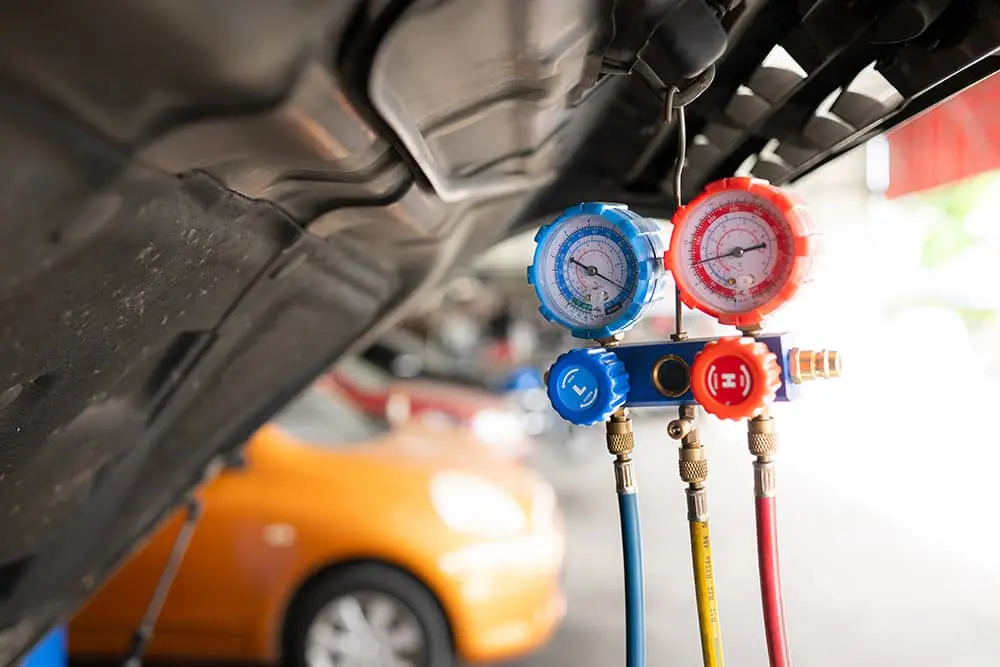
Your AC system compresses refrigerant, moves it through a condenser and evaporator, and uses that cycle to pull heat and humidity from your cabin air. Understanding each step makes it easier to recognize when something goes wrong.
The cooling process begins at the compressor, which pressurizes the refrigerant, raising both its temperature and pressure. From there, it travels through a hose to the condenser, where it sheds heat and transitions from a gas to a liquid. It then passes through the receiver and dryer, which filter out excess moisture and contaminants before it moves on.
Next, the refrigerant flows through the expansion valve, where it rapidly cools before entering the evaporator. The evaporator works like a radiator in reverse. Warm cabin air passes across its chilled surface. Heat and humidity are pulled out, and cooled, dry air flows into the cabin through your vents.
Every component in this system must remain sealed at all times. When a hose cracks, a fitting loosens, or a component fails, refrigerant escapes and outside moisture enters. That moisture corrodes expensive internal parts quickly. Catching a leak early is almost always far less expensive than letting the damage compound.

How to Tell If Your Car’s AC Is Leaking?
Refrigerant leaks show up as warm air from your vents, oily residue near fittings, musty cabin air, or a larger-than-normal puddle under your vehicle. Not every sign is obvious. Here is what to watch for:
Large Puddles Under the Vehicle: A few drips of water after running the A/C on a warm day is completely normal. That is just condensation draining from the evaporator. However, if you notice a large or expanding pool of liquid forming under your car, that is a different story and warrants a closer look.
Colored or Oily Residue: Do a quick dip test with a rag or paper towel. Clean condensation water is clear and odorless. If the liquid has any color to it or feels slightly oily, the fluid may be mixing with the condensation as it drips from the evaporator. That is a strong indicator of a leak somewhere in the loop.
Warm Air From the Vents: Your AC system holds a fixed amount of refrigerant. Once it starts escaping through a leak, cooling performance drops noticeably. Warm air from your vents, or a system that takes much longer to cool the cabin, points to low refrigerant.
Oily Stains Around Fittings or Hoses: Refrigerant carries lubricating oil through the system. When it leaks, that oil often leaves a greasy residue around hose connections, fittings, and component seals. Visible oily buildup in those areas is one of the clearest signs of a slow leak.
Musty Smell or Increased Cabin Humidity: When refrigerant levels drop, the evaporator loses its ability to remove moisture from the air effectively. The result is humid, sometimes musty-smelling air reaching the cabin. If your windows are fogging up more than usual or the air inside just feels damp, a refrigerant leak could be the underlying cause.
Our AC Leak Detection Process
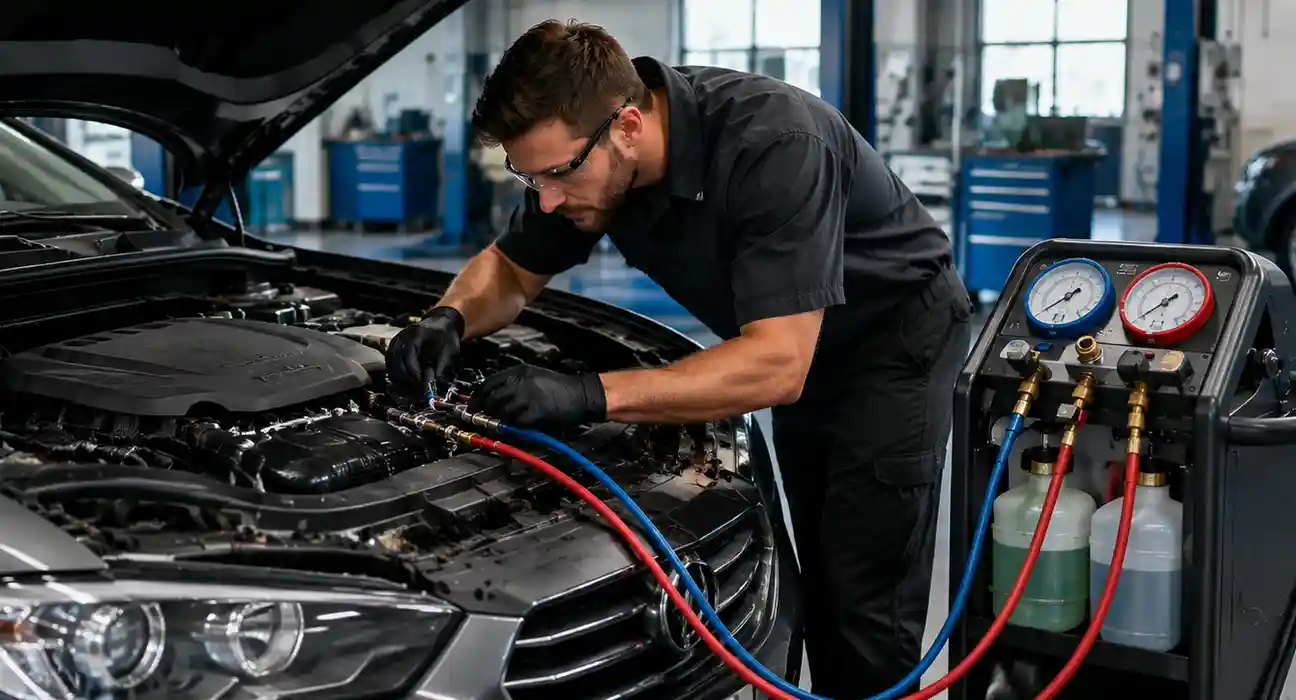
We use three methods to find leaks: fluorescent dye with UV inspection, nitrogen pressurization with bubble detection, and an electronic refrigerant sniffer. Finding a leak is not as simple as a visual inspection. The AC system is sealed, pressurized, and spread across multiple components throughout the engine bay and cabin. Using all three methods together means nothing gets missed.
Step 1 – Fluorescent Dye Injection with Black Light Inspection: We introduce a UV fluorescent dye into the AC system and run it through a full cycle. Using a black light, we then inspect every component, fitting, hose, and seal. Anywhere the dye has escaped glows visibly under the light, allowing us to pinpoint even the smallest leak points that would otherwise be invisible.
Step 2 – Nitrogen Pressurization with Bubble Spray Detection: We pressurize the system with nitrogen up to 220 PSI and apply a detection solution across all connection points, seals, and suspected areas. Any active leak produces visible bubbling at the source. That gives us a precise location without relying on any charge being present in the system.
Step 3 – Electronic Refrigerant Leak Detector: We use a calibrated electronic sniffer that detects refrigerant molecules in the air around components and lines. It catches leaks too small to produce visible dye traces or bubbling, and works across both R-134a and R-1234yf refrigerant systems.
Step 4 – Full System Pressure and Performance Check: Once the repair is confirmed, we evacuate the system and pull a deep vacuum to remove air and moisture. We then recharge to the exact factory specification for your vehicle. A final pressure and performance test confirms everything is cooling correctly before we return your keys.
Refrigerant Services and Pricing
Repair cost depends mainly on which refrigerant your vehicle uses. Pre-2016 vehicles use R-134a, which is more affordable. Vehicles from 2016 and newer use R-1234yf, which costs significantly more. Here is what to expect:
R-134a (Pre-2016 Vehicles): R-134a is the older refrigerant standard found in vehicles manufactured before 2016. It is more affordable, and our base service includes up to one pound of charge. Total repair costs are generally lower, making leak repairs on older vehicles more straightforward from a cost perspective.
R-1234yf (2016 and Newer Vehicles): R-1234yf is the current industry standard for modern vehicles. It costs significantly more due to EPA-regulated handling requirements and the refrigerant itself. Three-pound systems can exceed $500 in refrigerant costs alone. Servicing R-1234yf systems requires specialized EPA-compliant equipment, and charge cycles take approximately two hours to complete properly. Our base service for R-1234yf includes eight ounces of refrigerant.
If you are unsure which system your vehicle uses, we can identify it quickly when you bring it in. We work confidently with both.
Why Early Detection Saves You Money
Fixing a small leak costs a fraction of what a failed compressor or corroded evaporator will. Your AC system holds a finite amount of refrigerant. Once a leak opens, the charge drops until the compressor starts running dry. A compressor without adequate lubrication fails quickly. Replacing one costs far more than sealing a hose or swapping an O-ring caught early.
Beyond the compressor, moisture entering through a compromised seal begins corroding the receiver, dryer, and evaporator core.
Those components are not cheap to replace, and the labor involved in accessing some of them adds up fast. In the Shenandoah Valley, summer heat hits the A/C system hard. Late May through August is when we see the most refrigerant leak calls, and by that point the damage has often already started. A diagnostic visit early in the season is almost always the most cost-effective path.
Why Winchester Drivers Choose Mission Auto Repair
ASE Certified Master Technicians: Members of our team hold ASE Master Technician certification. That means your vehicle is diagnosed and repaired by credentialed professionals.
25+ Years of Experience: We’ve been servicing cars, trucks, and SUVs in the Winchester area for over 25 years. AC systems are something we see and repair daily.
Extensive Warranty: Every repair we perform is backed by our industry-leading warranty. If something isn’t right, we make it right.
Honest, Transparent Pricing: You receive a clear, itemized quote before any work begins. We factor in your refrigerant type and system size so there are no surprises when the job is done.
Fast Turnaround: Most air conditioning diagnostics and repairs are completed the same day. We work efficiently because we know you need your vehicle back.
Serving Winchester, Frederick County, Stephens City, Middletown, Berryville, and surrounding communities.
Frequently Asked Questions
How do I know if my car has a refrigerant leak vs. normal condensation?
Normal condensation is clear, odorless water that drips from underneath the vehicle after the AC has been running. A refrigerant leak often produces colored or oily residue, reduced cooling performance, or visible greasy buildup around hoses and fittings. If you are unsure, bring it in, and we will tell you exactly what you are dealing with.
How long does an AC leak diagnosis take?
Most diagnostics are completed within the same visit. The length depends on where the leak is located and which detection method isolates it fastest. We will give you a realistic time estimate when you arrive.
Can I keep driving with an AC leak?
You can drive the vehicle, but we wouldn’t recommend running the A/C if the charge is low. Operating the system without adequate refrigerant and lubricating oil accelerates compressor wear significantly. The longer it runs in that condition, the more expensive the eventual repair becomes.
How much does it cost to fix an AC leak?
It depends on the location of the leak, the parts required, and the refrigerant type your vehicle uses. R-1234yf systems cost more to service than R-134a systems due to refrigerant pricing and equipment requirements. We inspect first and give you a clear price before any work begins.
Do you work on all makes and models?
Yes. We service AC systems across all domestic and foreign makes and models, including both R-134a and R-1234yf refrigerant systems.
Book Your AC Leak Diagnosis in Winchester Today
Do not wait until your system stops cooling entirely. The longer a refrigerant leak goes unaddressed, the more damage it causes to surrounding components. Browse our A/C repair services, or contact us to book a diagnosis before it becomes a much bigger expense.