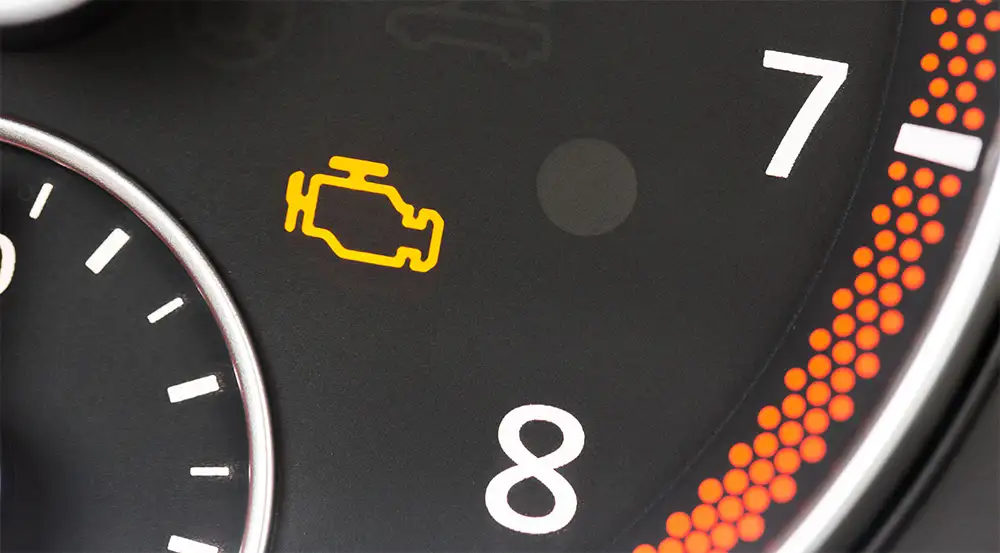

By the time your check engine light comes on, your car has usually been telling you something is wrong for days or weeks. Most drivers wait for the dashboard to flash before booking a diagnostic. The smarter move is to recognize the earlier signals and book the diagnostic before the light ever turns on.
An engine diagnostic test reads what your vehicle’s onboard computers know about every system they monitor. Done well, it turns guesswork into a clear answer: what’s wrong, why, and what to do about it. Done poorly, it’s a code reader plugged in for two minutes that misses the actual problem.
Below are the five signs you need an engine diagnostic test, what a real diagnostic includes (and doesn’t), and how to know if your shop is doing it right.
What Is an Engine Diagnostic Test?
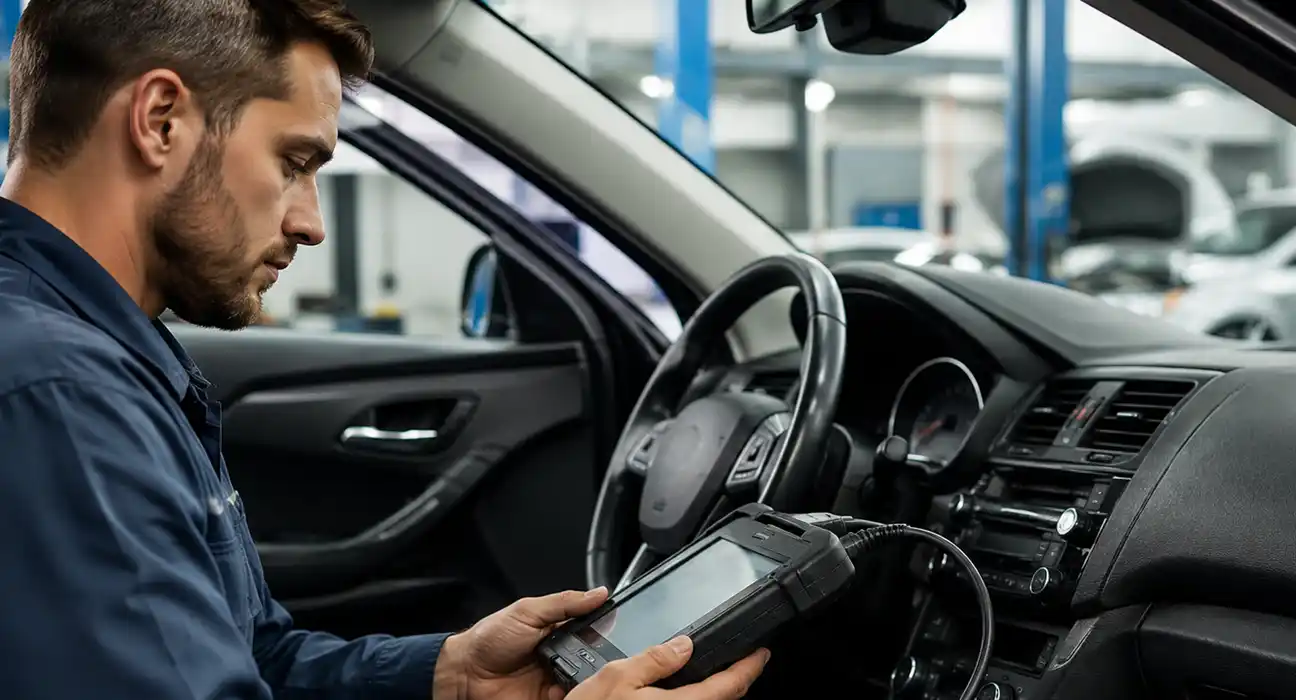
An engine diagnostic test is a structured inspection of your vehicle’s electronic systems using a professional scan tool, live sensor data, and a technician’s judgment. It identifies the root cause of a fault, not just the symptom.
Modern vehicles have between 30 and 100 onboard computers (called modules) running everything from the engine to the brakes to the airbags. Each module logs trouble codes, live sensor readings, and freeze-frame data when something goes wrong. A diagnostic test pulls that data and interprets it.
Two things separate a real diagnostic from the free “code reads” offered at parts stores. First, a code is a clue, not an answer. A P0420 code, for example, can mean a failed catalytic converter, a bad oxygen sensor, an exhaust leak, or a fuel system issue. Second, the test relies on a technician who can interpret live data and run targeted system checks. The scan tool is the instrument. The diagnosis is the work.
| What a Code Reader Tells You | What a Full Diagnostic Adds |
|---|---|
| A trouble code (e.g., P0420) | Why that code triggered, on this vehicle, today |
| That a sensor reported a fault | Whether the sensor is bad, or the system it monitors is |
| A general direction to look | Live data, freeze-frame review, and bidirectional testing |
| One symptom at a time | How multiple codes connect to a single root cause |
5 Signs You Need an Engine Diagnostic Test
These are the signs we see most often at our Winchester shop, in roughly the order they show up in a vehicle’s decline. Several happen before the check engine light triggers. That’s the part most articles miss.
1. The Check Engine Light Is On (Solid or Flashing)
If your check engine light is solid, schedule a diagnostic within a week. If it’s flashing, stop driving and get the car towed in. A flashing light means active engine misfire, which can destroy a catalytic converter in under 30 minutes.
The check engine light is the most familiar trigger, and also the most misunderstood. It can mean something as minor as a loose gas cap or as serious as a failing catalytic converter. The light alone doesn’t tell you which. Only a diagnostic does.
A common mistake is reading the code at a parts store, replacing the part the code names, and watching the light come back. That’s because the code reports the symptom (“oxygen sensor reading low”), not the cause (“small vacuum leak letting unmetered air into the intake”). On modern vehicles, especially hybrids, chasing codes without interpreting live data wastes parts and money.
2. Unusual Sounds, Smells, or Vibrations
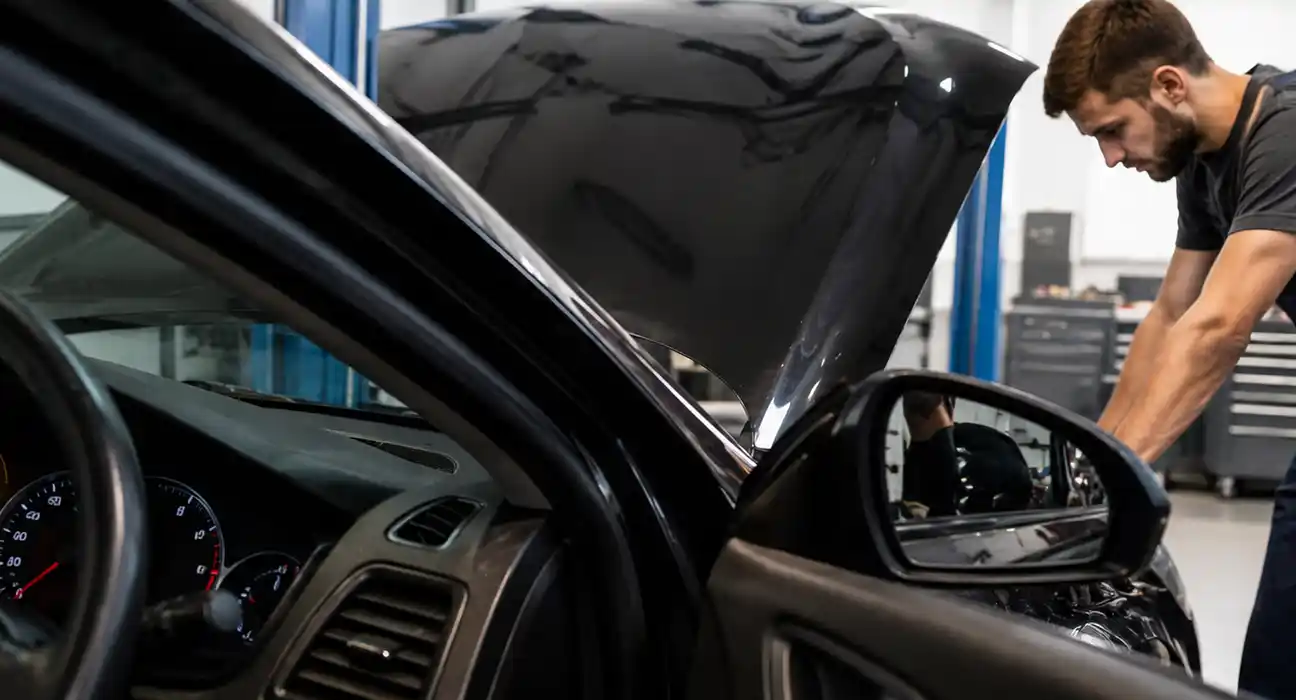
Engines don’t make new noises by accident. A knock, ticking, hiss, or burning smell is your engine reporting a problem mechanically before it reports one electronically.
The sounds and smells worth taking seriously: a metallic knock on cold start, a hiss under the hood at idle, a burning oil or coolant smell after a drive, or a vibration that worsens as you accelerate. Each points to a specific category of issue. A diagnostic test combined with a physical inspection narrows it down quickly.
We see this often on vehicles in the 80,000 to 120,000-mile range, where small problems (a weeping coolant hose, a starting-to-fail water pump, a slightly leaking valve cover gasket) show up as smells or sounds well before they show up as codes. Catching them at this stage typically saves customers hundreds compared to repairing the cascade damage that follows.
3. A Drop in Fuel Economy
If your miles per gallon has dropped 10% or more without a change in driving habits or weather, your engine is working harder than it should. A diagnostic can identify why.
Fuel economy is one of the most sensitive indicators of engine health. The U.S. Department of Energy notes that a single faulty oxygen sensor can reduce fuel economy by up to 40%. More commonly, drivers see drops of 2 to 5 mpg from issues like a dirty mass airflow sensor, a partially clogged fuel injector, a failing thermostat, or worn spark plugs.
What makes fuel economy a useful warning sign is that it changes before the check engine light triggers. The car compensates electronically until it can’t. Tracking your mpg (most vehicles built after 2013 display it on the dash) gives you an early read on engine condition.
4. Hesitation, Stalling, or Rough Idle
Hesitation when you press the gas, stalling at stoplights, or a rough idle that shakes the steering wheel are all signs of a fuel, ignition, or sensor problem. These conditions are unsafe and usually get worse, not better.
Rough running affects more than comfort. A misfiring cylinder dumps unburned fuel into the exhaust system, which damages the catalytic converter and turns a small repair into a much larger one. Stalling at intersections is a safety risk. Hesitation under acceleration affects merging and passing.
These symptoms typically point to ignition coils, spark plugs, fuel injectors, the throttle body, or the mass airflow sensor. A diagnostic test reads short-term and long-term fuel trim values, misfire counts per cylinder, and ignition timing data, which together identify which component is the actual cause rather than guessing.
5. Other Dashboard Warnings (Not Just the Check Engine Light)
ABS, traction control, airbag, battery, and tire pressure warnings can all stem from engine-related electrical issues. Modern vehicles share data between modules, so a problem in one system often shows up as a warning in another.
A weak battery or alternator can trigger ABS, traction control, and steering warnings simultaneously. A failing crankshaft position sensor can light up the airbag warning if it shares power with that module. We regularly see vehicles arrive with three or four dashboard lights on, all caused by a single underlying issue.
This is one of the strongest arguments for a full diagnostic rather than a code read. A scan tool that only reads engine codes misses the other modules entirely. The connection between symptoms is invisible without checking each one.
What a Real Engine Diagnostic Looks Like
A proper diagnostic test takes 60 to 90 minutes for most vehicles. It includes scanning all modules, reviewing live data, reproducing the issue when possible, and isolating the root cause before any parts are recommended.
At Mission Auto Repair, our diagnostic process follows a consistent sequence:
- Full multi-module scan, not just the engine module. We pull codes from every system that has them.
- Freeze-frame data review, which captures vehicle conditions at the moment a fault was logged.
- Live data analysis with the engine running, including fuel trim, sensor voltages, and timing values.
- Targeted physical inspection of the components implicated by the data.
- Bidirectional testing where applicable (for example, commanding a fuel injector to fire to verify it works).
- A clear written explanation of what we found, what it will cost to fix, and what happens if it isn’t addressed.
This is a meaningful step up from a free code read. Bradley Hindman, our owner and ASE Certified Master Technician, has spent over 25 years building the diagnostic process we use today. The goal is straightforward: tell you what’s actually wrong, in plain language, the first time.
What Affects the Cost of an Engine Diagnostic Test?
The cost of an engine diagnostic depends on how thoroughly the work is done, not what tool is used. A free code read and a full diagnostic are different services with different outcomes.
If a shop offers a diagnostic for the price of a coffee, what they’re really offering is a code read. That’s fine for confirming a loose gas cap, but it won’t solve a recurring misfire or an intermittent stall. A complete diagnostic that includes the steps described above takes real time and real expertise, and it’s priced accordingly.
Three factors typically influence the price:
- Vehicle complexity. Hybrids, modern diesels, and luxury vehicles have more modules and more advanced systems to scan.
- How intermittent the issue is. Faults that don’t reproduce on demand take longer to isolate.
- How many systems are involved. A single misfire is faster to diagnose than a vehicle with five dashboard warnings across multiple systems.
How to Tell if a Shop Is Doing It Right
A good diagnostic shop explains what they found, shows you the data, and recommends only what’s necessary. A shop chasing codes will replace parts that didn’t need replacing and leave the real problem unsolved.
Three questions to ask any shop after a diagnostic:
- “Can you show me the live data or the codes you found?” A shop with nothing to show ran a code read, not a diagnostic.
- “What’s the cause, and what’s the symptom?” If they can’t separate the two, the diagnosis isn’t complete.
- “What happens if I delay this repair?” An honest shop will tell you what’s urgent and what can wait. A pushy shop will tell you everything is urgent.
Customers regularly come to us for a second opinion after a dealership recommends a major repair. In many cases, the actual fix is smaller, less expensive, or different than what was quoted. That’s the value of accurate diagnostics.
Engine Diagnostic Test FAQ
How long does an engine diagnostic test take?
A full engine diagnostic typically takes 60 to 90 minutes. Simple issues (loose gas cap, single clear code) can be confirmed in 30 minutes. Intermittent or multi-system faults sometimes require a longer drive cycle and additional testing.
Can I do a diagnostic test myself with a code reader?
You can read codes yourself, but you can’t run a full diagnostic. A consumer code reader gives you the trouble codes stored in the engine module. That’s a starting point, not an answer. Without live data, freeze-frame review, and the ability to test components, code readers regularly lead drivers to replace the wrong part.
Will a diagnostic catch a transmission problem?
A full multi-module diagnostic will catch transmission codes and most transmission-related sensor issues. It won’t replace a road test or a fluid inspection, both of which we include for any transmission concern. A code-only scan often misses transmission issues entirely if the technician only pulls engine codes.
Is it safe to drive with the check engine light on?
If the light is solid, you can usually drive short distances safely. Schedule a diagnostic within a week. If the light is flashing, stop driving and get the vehicle towed. A flashing light indicates active misfire, which can ruin a catalytic converter quickly. Mission Auto Repair offers complimentary towing for customers in the Winchester area.
Can a diagnostic test damage my car?
No. A diagnostic test reads existing data and runs controlled tests that the vehicle is designed to support. The scan tool communicates with the same modules that already run your car. There’s no risk to the engine, transmission, or any other system from a properly performed diagnostic.
How often should I get an engine diagnostic?
Most drivers don’t need a routine diagnostic, but it’s a smart step before a long road trip, when buying a used vehicle, or whenever any of the five signs above appear. We also include a full module scan as part of our Virginia State Inspection process, which catches early issues most other shops miss.
The Bottom Line
The check engine light is a late warning, not an early one. By the time it triggers, most engine problems have already been signaling for days or weeks through fuel economy, sound, smell, performance, or other dashboard alerts. A real diagnostic test reads the full picture and gives you a clear answer about what’s wrong and what to do about it.
If your vehicle is showing any of the signs above, the cheapest move is the earliest one. Catching a small problem now is almost always less expensive than fixing the cascade damage later.
Engine Diagnostics in Winchester, VA
Mission Auto Repair offers complete engine diagnostic services with the equipment and expertise to find the actual cause of any fault, not just the symptom. Here’s why drivers across the Shenandoah Valley trust us with their vehicles:
- ASE Certified Master Technicians
- 25+ years of experience
- 2-Year/24,000 Mile Warranty on repairs
- Honest, transparent pricing (no surprises, no upsells)
- Fast turnaround
Serving Winchester, Frederick County, Stephens City, Middletown, Berryville, and surrounding communities.
Schedule your engine diagnostic test by visiting our contact page or calling our shop today. We’ll explain what’s going on with your vehicle in plain language and get you back on the road with confidence.