

This guide walks through each cause, what it feels like, and how urgent it is. Two things to keep straight from the start. First, when the shaking happens matters more than how bad it feels. Second, a shaking wheel and a stiff wheel are two separate problem sets. Shaking usually comes from the wheels, brakes, or suspension. Stiffness usually comes from the power steering system.
Quick Diagnosis: Match the Symptom to the Likely Cause
| What you feel | Most likely cause |
|---|---|
| Shakes only when braking | Warped brake rotors |
| Shakes at 50 to 70 mph, smooths out at other speeds | Unbalanced wheels |
| Shakes and the car pulls to one side | Wheel alignment |
| Shakes or grinds when turning | Worn wheel bearings |
| Clunks over bumps, loose or wandering feel | Worn suspension or steering parts |
| Hard to turn, especially at low speed | Power steering problem |
| Started suddenly and is getting worse | Stop driving and call a shop |
Use the table as a starting point, not a final answer. Several of these problems can overlap, and a proper inspection is the only way to confirm the cause.
Steering Wheel Shaking When You Brake: Warped Rotors
If the shake shows up only when you press the brake pedal, the most likely cause is warped brake rotors. Rotors are the flat metal discs your brake pads squeeze to slow the car. Braking creates heat. Over time, that heat can warp the rotor surface so it is no longer flat. When the pads press against that uneven surface, you feel a pulse or shake through the wheel and often through the brake pedal too.
Warped rotors will not fix themselves. The shake gets worse as the warping gets worse, and braking distance can suffer. Replacing the rotors is the fix. If the shaking happens while slowing down but not while braking hard, a stuck brake caliper is another possibility. A caliper that stays pressed against the rotor drags the whole time you drive, which wears parts fast and can make the car unsafe.
Either way, this is a brake system problem, not a steering problem. It calls for a brake inspection and repair, and it should not wait.
Steering Wheel Shaking at Highway Speed: Unbalanced Wheels
A shake that appears around 50 to 70 mph and fades at lower speeds usually means the wheels are out of balance. No wheel and tire assembly is perfectly balanced on its own. The weight is always slightly heavier in some spots than others, so small metal weights are attached to the rim to even it out. When one of those weights falls off, or a tire wears unevenly, the wheel wobbles slightly as it spins. At highway speed, that wobble becomes a steady vibration in the wheel.
Wheel balancing is a quick, routine service. It is also one of the cheapest fixes on this list, so do not ignore it. Driving on unbalanced wheels wears tires unevenly and puts extra stress on suspension parts, which turns a small bill into a bigger one.
Low or uneven tire pressure can cause a similar shake. Check your tire pressures first. If they are correct and the shake continues, balancing is the next step.
Shaking Plus Pulling to One Side: Wheel Alignment
If the wheel shakes and the car drifts left or right when you are trying to drive straight, alignment is the likely cause. Alignment refers to the angles of your wheels, which are set at the factory so the tires sit flat on the road and all four wheels roll in the same direction. Potholes, curb strikes, and normal miles can knock those angles out of spec. When that happens, the tires scrub against the road instead of rolling cleanly. You feel it as vibration, pulling, or a steering wheel that sits off center when you drive straight.
Misalignment also chews through tires. Uneven wear on one edge of the tread is a common sign. Correcting alignment protects the tires, steadies the steering, and takes strain off the suspension. You can read more about what misalignment affects in our guide to why wheel alignment affects more than tires.
Shaking or Grinding When Turning: Wheel Bearings
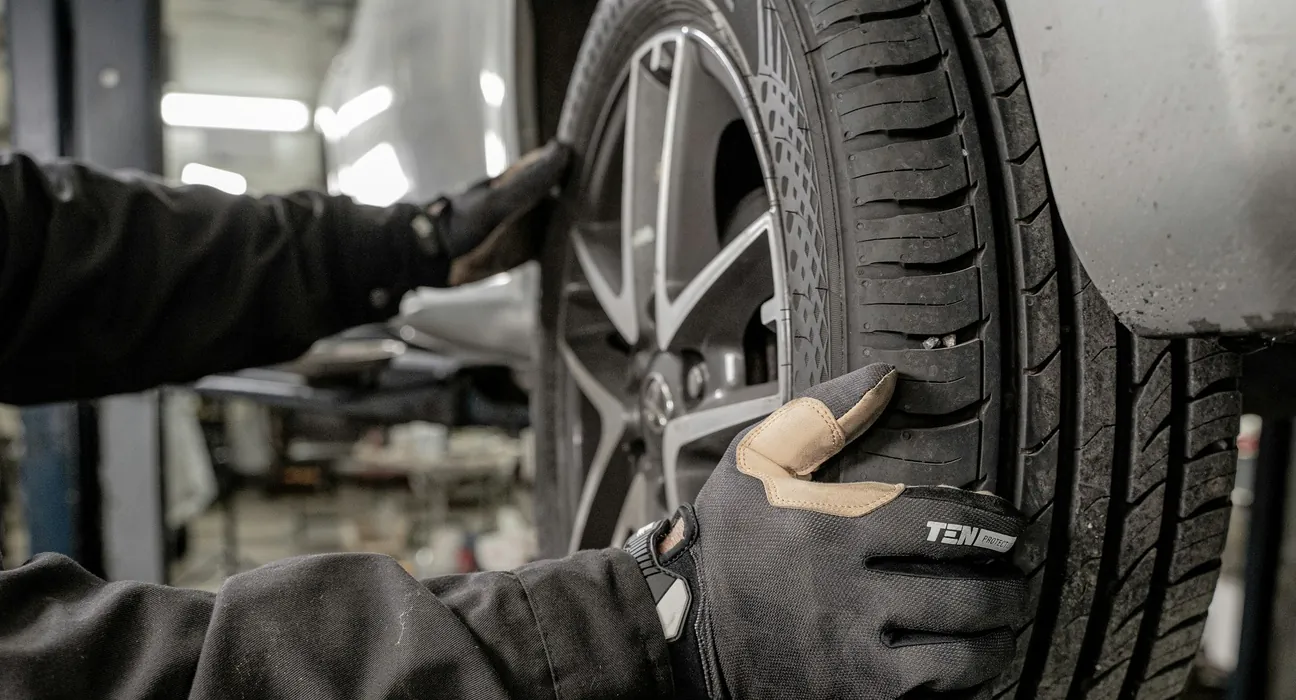
A shake or grinding noise that shows up mainly in turns points to the wheel bearings. Bearings let each wheel spin smoothly on its hub. When a bearing wears out or loses lubrication, the wheel develops play. You may hear a hum or growl that changes with speed, and the steering can feel loose or shaky in corners.
Worn bearings are a safety item. A bearing that fails completely can let the wheel wobble badly or seize. If you suspect a bearing, have it inspected soon and avoid long highway trips until it is checked.
Clunks, Looseness, or a Wandering Feel: Worn Steering and Suspension Parts
The steering and suspension system is a chain of connected parts: tie rods, ball joints, control arms, bushings, shocks, and struts. Each one can develop play as it wears. Even a small amount of looseness in one part can make the whole system feel slack. Common signs include clunking over bumps, a steering wheel that shakes at various speeds, a nose that dives when braking, and a car that wanders or needs constant small corrections to stay straight.
These symptoms rarely improve on their own, and worn parts load up the parts around them. A worn tie rod, for example, can pull the alignment out, which then wears the tires. That is why a proper steering and suspension inspection checks the whole system rather than one part. Diagnosing the root cause first avoids paying to replace parts that were not the problem.
One more reason not to wait: badly worn suspension parts can fail while driving. If the clunking is loud, or the steering has become vague enough that the car feels unpredictable, treat it as urgent.
Steering Wheel Hard to Turn: Power Steering Problems
A stiff steering wheel is a different problem from a shaking one. Stiffness almost always traces back to the power steering system, which is what makes a modern car easy to steer at low speed.
Cars with hydraulic power steering rely on fluid under pressure. The most common cause of heavy steering in these cars is low fluid, usually from a leak. Topping up the fluid may help for a short time, but the leak itself needs to be found and fixed. A worn drive belt or a failing power steering pump can cause the same heavy feel, often with a whining noise when you turn.
Many newer cars use electric power steering instead of fluid. In those cars, sudden heavy steering can come from an electrical fault, a failing motor, or even a weak battery or charging system. A warning light on the dash often appears at the same time.
If the steering suddenly becomes hard to turn while driving, pull over when it is safe to do so. The car can still be steered without power assist, but it takes far more effort, and the loss of assist means something in the system has failed.
Is It Safe to Keep Driving?
It depends on the cause, which is why identifying the timing of the symptom matters.
Unbalanced wheels and mild misalignment are not emergencies. They still deserve prompt attention because they wear tires and suspension parts the whole time you drive.
Warped rotors, stuck calipers, worn bearings, badly worn suspension parts, and any sudden loss of power steering are safety problems. If the shake came on suddenly, is getting worse quickly, or the car has become hard to control, stop driving and have the car looked at. A vehicle that cannot steer or brake predictably is not safe at any speed.
Frequently Asked Questions
Why does my steering wheel shake only when I brake?
Shaking that appears only under braking is the classic sign of warped brake rotors. The brake pads are pressing against a surface that is no longer flat, and you feel the pulse through the wheel and pedal. A stuck brake caliper can cause a similar feel while slowing down.
Why does my steering wheel shake at high speeds?
A shake that starts around 50 to 70 mph and fades at lower speeds usually means the wheels are out of balance. Low tire pressure and uneven tire wear can cause the same symptom. Balancing the wheels is the standard fix.
Why is my steering wheel hard to turn at low speeds?
Heavy steering at low speed points to the power steering system. In cars with hydraulic steering, the usual cause is low fluid from a leak, a worn belt, or a failing pump. In cars with electric power steering, the cause is usually electrical.
Can low power steering fluid cause shaking?
It can. A struggling power steering pump can send a shudder or whine through the wheel, especially during slow, tight turns. The more common symptom of low fluid is stiffness, but the two can appear together.
Is it safe to drive with a shaking steering wheel?
Sometimes, but not for long. Unbalanced wheels and mild alignment problems are wear issues, not emergencies. Shaking under braking, grinding in turns, loud clunks, or a sudden change in how the car steers are safety problems. Get those inspected before driving further than you have to.
Will an alignment fix my shaking steering wheel?
Only if misalignment is the cause. Alignment fixes shaking that comes with pulling to one side and uneven tire wear. It will not fix warped rotors, unbalanced wheels, or worn parts. A proper inspection identifies the cause before any work is done, so you only pay for the repair you actually need.
How do I know if it is the brakes, the tires, or the suspension?
The timing of the shake is your best clue. Shaking only under braking points to warped rotors. Shaking that appears at highway speed and fades at lower speeds points to wheel balance. Shaking or grinding in turns points to the wheel bearings. Shaking at any speed, especially with clunks or a wandering feel, points to worn steering or suspension parts. Note what you feel and when it happens, then share that with your mechanic. It makes the diagnosis faster.
A shaking or stiff steering wheel always has a cause, and the cause is findable. If your steering does not feel right, call Mission Auto Repair in Winchester, VA at the number at the top of the page and describe what you feel and when. We will help you figure out the next step.